Forecast Therapy: The Psychological Breakthrough No One Saw Coming
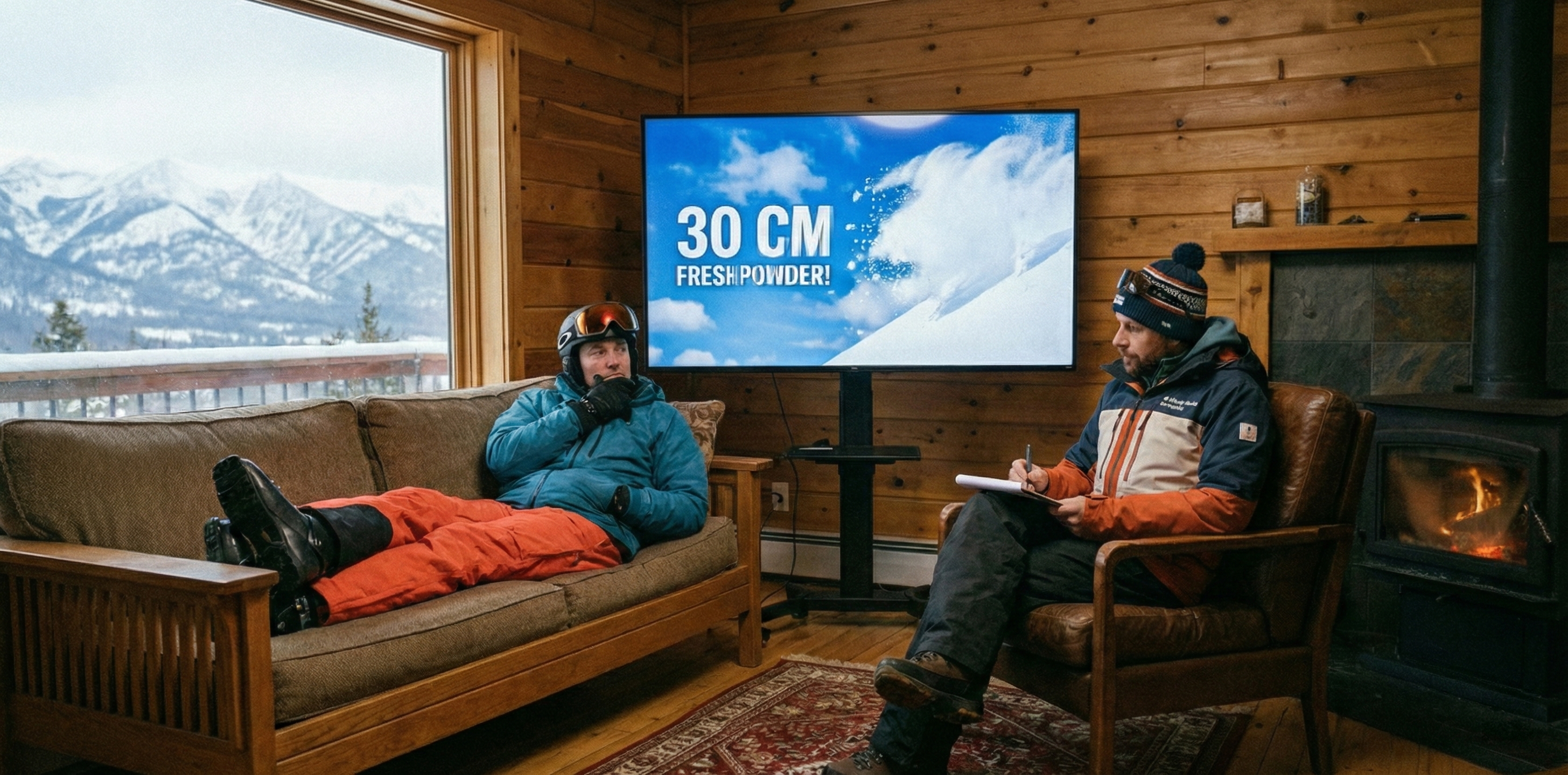
While the world debates burnout, anxiety, and digital detox trends, something unexpected is emerging quietly in mountain regions across Europe: Forecast Therapy.
The method is simple. Almost suspiciously simple.
Instead of asking, "How does that make you feel?" the therapist asks:
"When was the last time you checked the snow forecast?"
The controversial founder of this approach, psychologist Dr. Martin Powder, claims that up to 60% of winter irritability isn't rooted in childhood trauma — but in misread weather forecasts.
Interview with Dr. Powder
Reporter: Doctor, are you seriously suggesting that an accurate snow forecast can improve mental health?
Dr. Powder: "Look. People aren't that complicated. When they think the weekend will be garbage, they're grumpy as hell. When they know 30 centimeters of fresh powder is coming, suddenly they're enlightened monks. That's not magic. That's psychology."
Reporter: What about traditional therapy?
Dr. Powder: "Talking about your childhood is fine. But sometimes a person is just miserable because they think they'll be stuck at home instead of skiing. You open positivesnowforecast.com, see blue skies and powder — half the tension disappears. It's not rocket science."
Reporter: That sounds almost too easy.
Dr. Powder: "Exactly. Humans can be pretty primitive. Movement, mountains, snow — that fixes more than people think. You don't always need another 45 minutes analyzing your relationship with your mother."
According to his clinic, dozens of couples have "postponed serious conflict" and chosen a ski weekend instead.
One patient shared:
"We walked in ready to break up. We walked out booking lift passes."
Is Forecast Therapy the future of psychology? Or simply the best excuse ever created to justify a ski trip?
Early "data" suggests winter irritability among clients dropped by 42%, while spontaneous mountain weekends increased by 87%.
Correlation? Causation? Dr. Powder just shrugs and points at the snow report.